California Permit Practice Test: 10 Free Questions
Answer each question, then open "Show answer" to check it. Every explanation points to the section of the California Driver's Handbook it comes from. For the pass mark and test rules, read our California permit test guide.
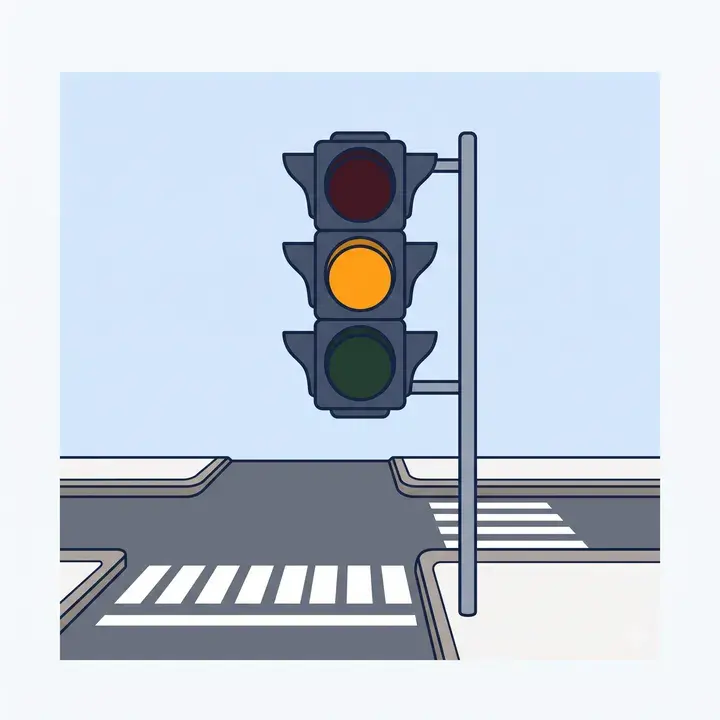
1. A traffic light turns solid yellow as you approach. What does it tell you?
- A. Only pedestrians may use the intersection
- B. Speed up so you clear the intersection first
- C. Cross traffic has already started moving
- D. The light is about to turn red, so stop if you can do it safely
Show answer
Answer: D. The light is about to turn red, so stop if you can do it safely
A solid yellow light means the light is about to turn red. Stop if you can do so safely. If you cannot stop safely, cross the intersection with caution. It is not a signal to speed up.
Handbook section: S7 Traffic Signals / Solid Yellow Light
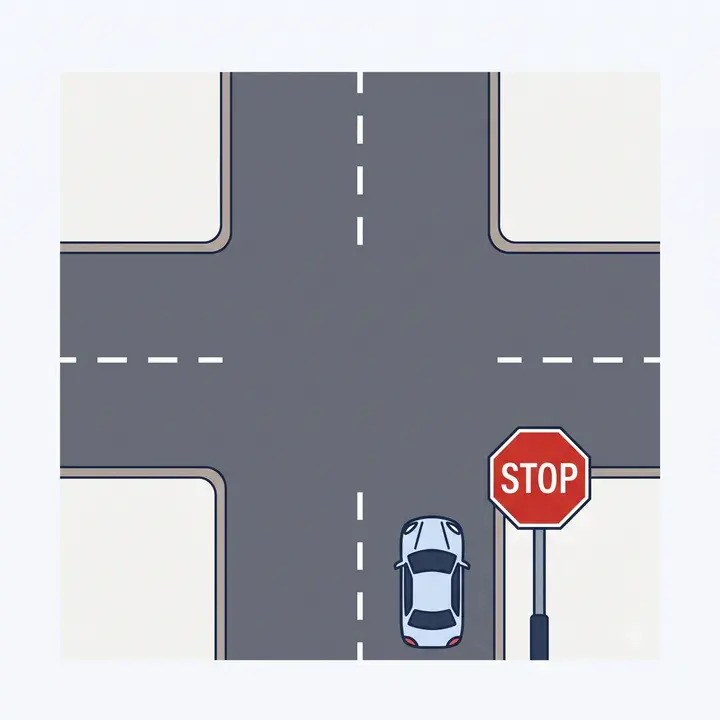
2. There is a STOP sign but no limit line and no crosswalk. Where do you stop?
- A. Before entering the intersection
- B. Past the intersection, where you can see better
- C. Anywhere before the corner
- D. Only if other traffic is present
Show answer
Answer: A. Before entering the intersection
Stop at the limit line or crosswalk if there is one. If there is neither, stop before entering the intersection and check all directions. Stopping past it puts you in cross traffic.
Handbook section: S7 Signs / STOP Sign
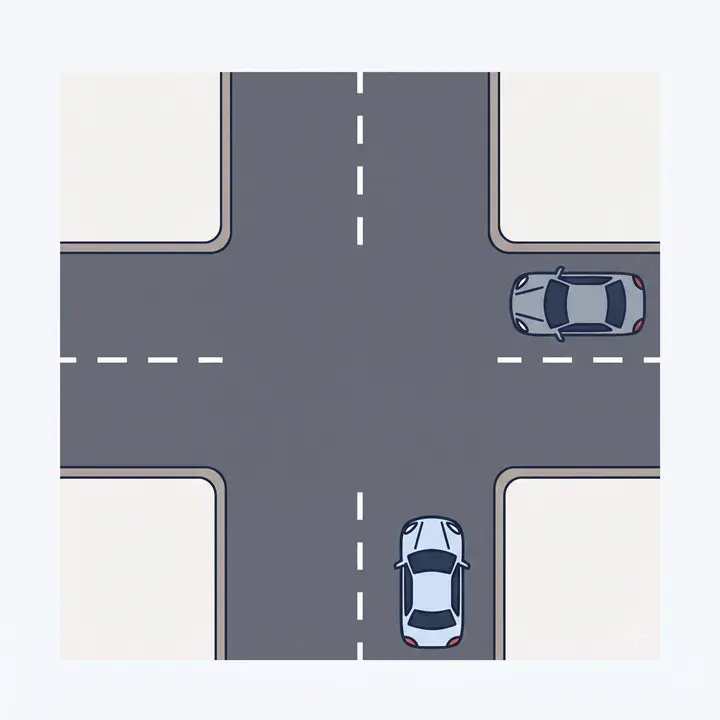
3. You and another driver reach an intersection with no signs or signals at the same moment. Who goes first?
- A. The driver on the left
- B. The larger vehicle
- C. The driver on the right
- D. The faster vehicle
Show answer
Answer: C. The driver on the right
When two vehicles arrive at the same time, you give way to the one on your right. Size and speed do not decide it.
Handbook section: S7 Right-of-Way / Intersections
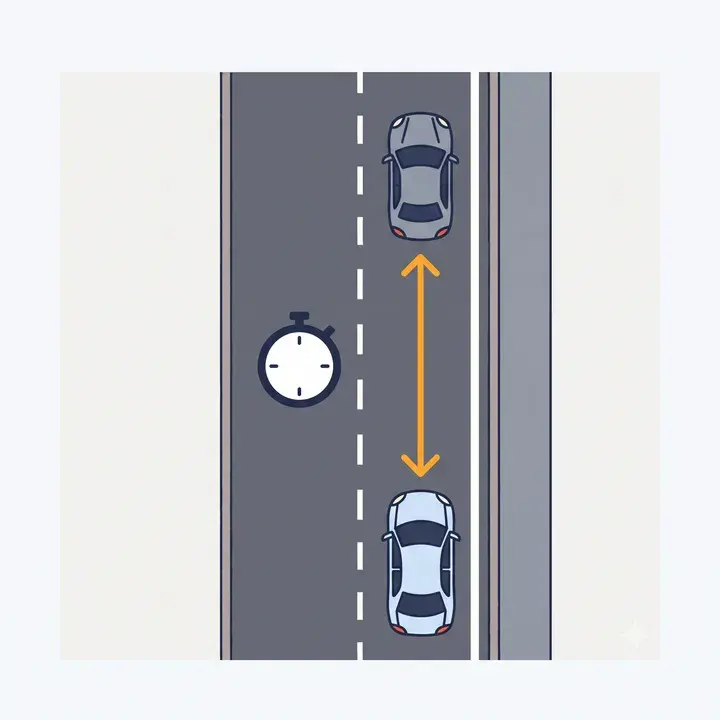
4. What is a simple way to check that you are following another vehicle safely?
- A. Keep a distance of about one car length at any speed
- B. Stay close enough to see its license plate
- C. Use the three-second rule
- D. Match its speed and ignore the gap
Show answer
Answer: C. Use the three-second rule
The three-second rule gives you time to react if the driver ahead brakes suddenly. A fixed car length does not scale with speed.
Handbook section: S8 Safe Driving / Tailgating
5. Before a turn, you should start signaling at least how far ahead?
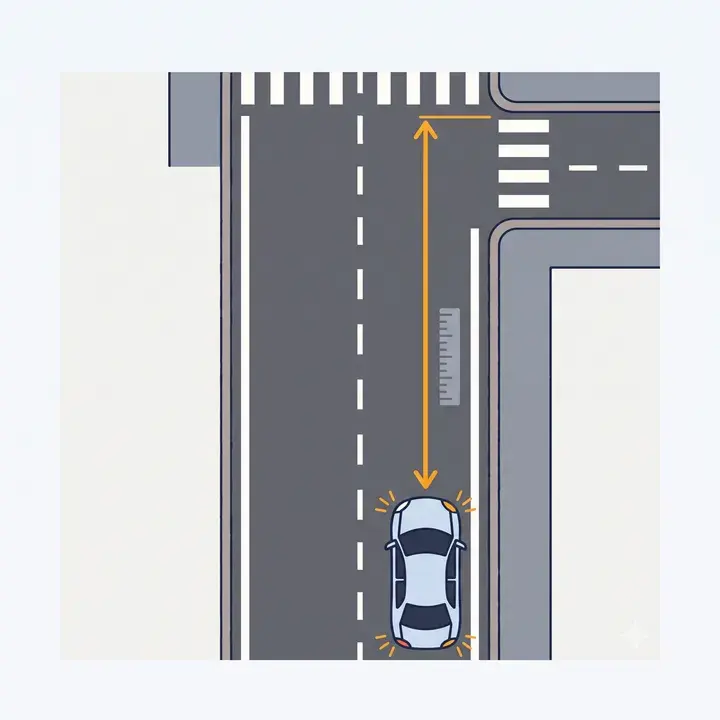
- A. 25 feet
- B. 50 feet
- C. 100 feet
- D. 300 feet
Show answer
Answer: C. 100 feet
In California, signal at least 100 feet before the turn so others can react. Other states can use a different distance.
Handbook section: S5 Signals, Horns, and Headlights / Signaling
6. How far may you drive in a center left turn lane?
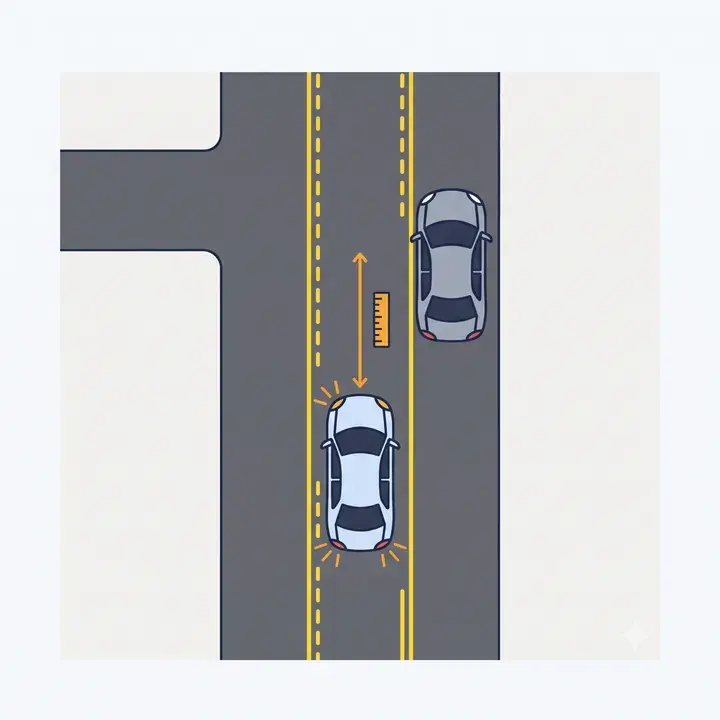
- A. As far as you like, it is a passing lane
- B. No more than 200 feet
- C. Up to one mile
- D. Only 100 feet
Show answer
Answer: B. No more than 200 feet
Center left turn lanes are for entering or leaving the road, not for travel. California limits you to 200 feet in them.
Handbook section: S6 Lane Markings / Center Left Turn Lanes
7. When you pass a bicyclist, what is the minimum clearance California requires?
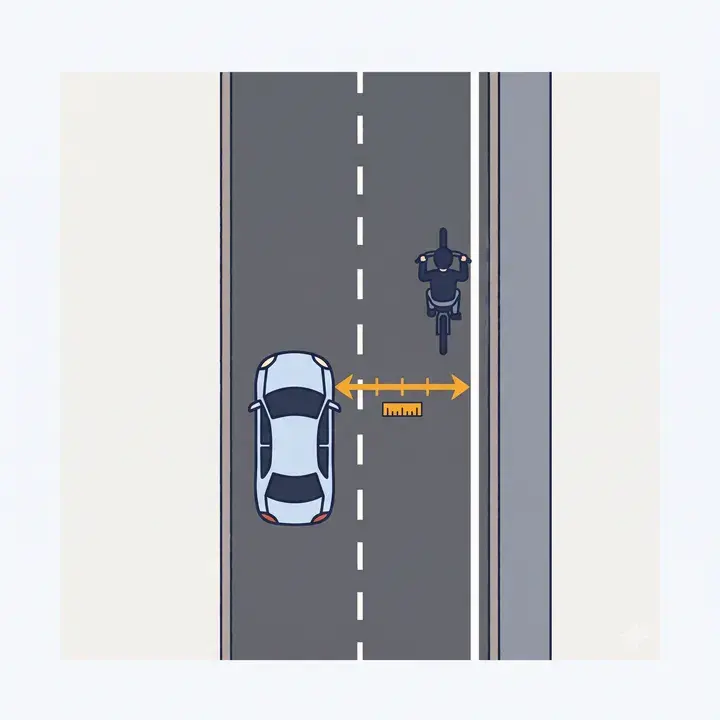
- A. 1 foot
- B. 2 feet
- C. 6 feet
- D. 3 feet
Show answer
Answer: D. 3 feet
Keep at least three feet between your vehicle and the bicyclist. If you cannot give that space, wait until you can.
Handbook section: S7 Sharing the Road / Passing a Bicyclist
8. In California, how close to a fire hydrant may you park?
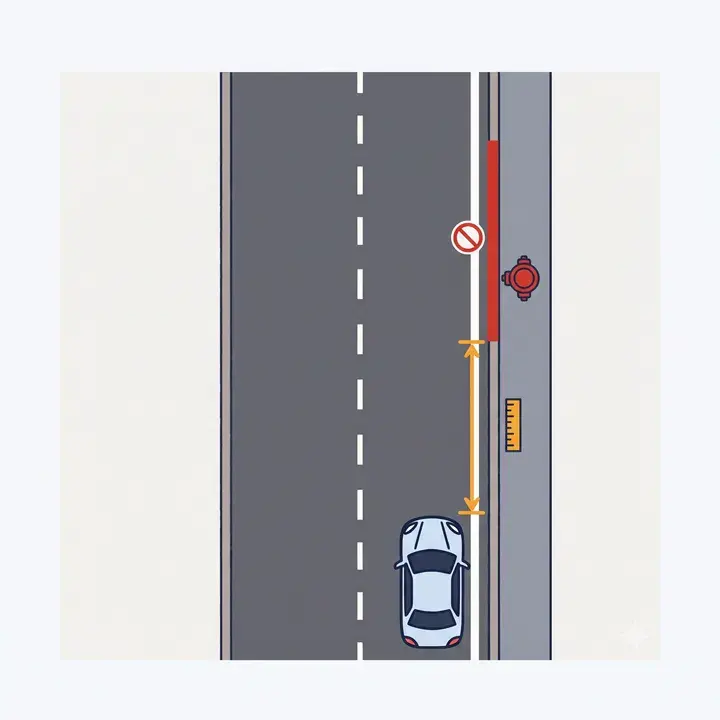
- A. Right next to it
- B. No closer than 15 feet
- C. No closer than 10 feet
- D. No closer than 5 feet
Show answer
Answer: B. No closer than 15 feet
Parking within 15 feet of a hydrant is illegal because fire crews need access. Distances like this differ from state to state.
Handbook section: S6 Parking / Illegal Parking
9. Unless a sign says otherwise, what is the speed limit in a California business or residential district?
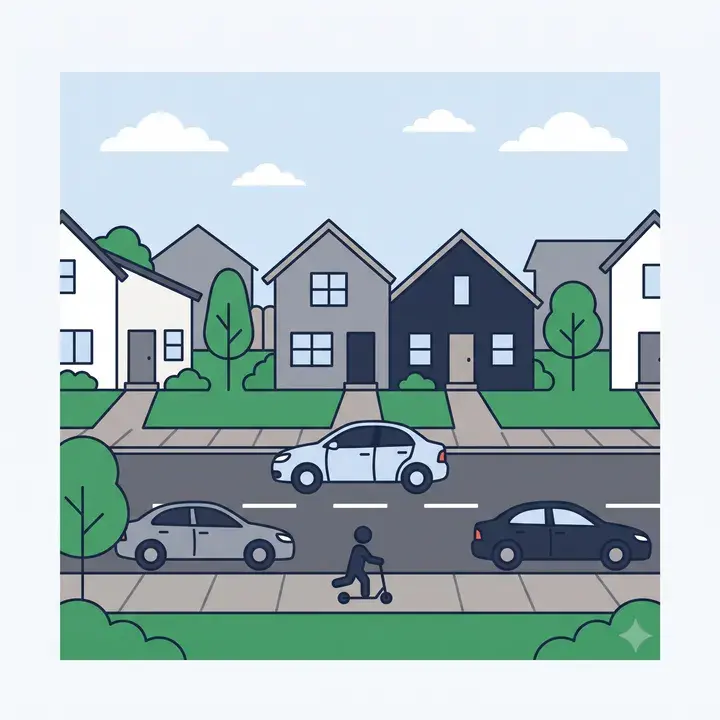
- A. 25 mph
- B. 15 mph
- C. 35 mph
- D. 45 mph
Show answer
Answer: A. 25 mph
California sets 25 mph in business and residential districts unless posted differently.
Handbook section: S7 Speed Limits / Business or Residential Districts
10. At a railroad crossing, a signal or person warns you that a train is coming. How far from the nearest track should you stop?
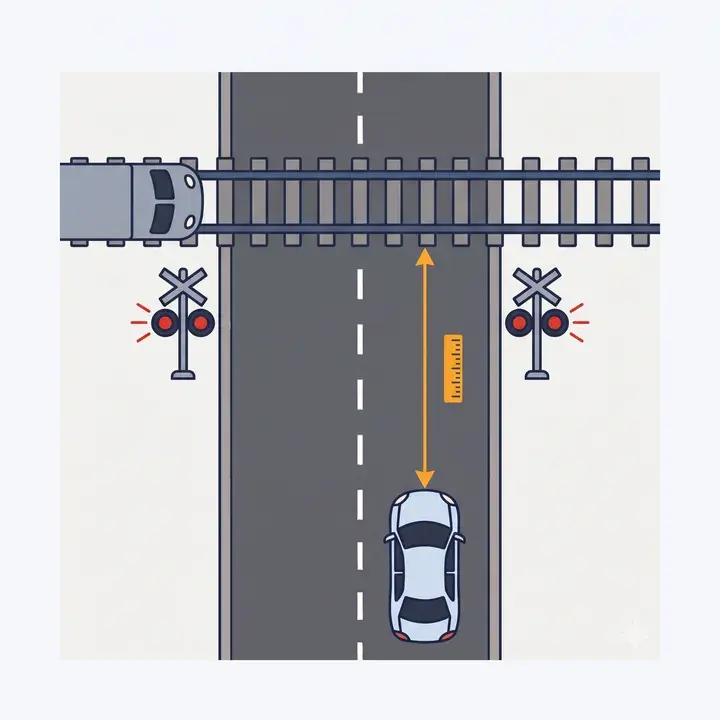
- A. At least 5 feet
- B. On the tracks if no train is visible
- C. At least 30 feet
- D. At least 15 feet
Show answer
Answer: D. At least 15 feet
Stop at least 15 feet from the nearest track. Never stop on the tracks themselves.
Handbook section: S7 Speed Limits / Near Railroad Tracks